
censii.co

The Missing Layer in Caribbean Risk

The Missing Layer in Caribbean Risk Why global shocks must also be understood through trust, narratives and strategic communication. The typical indicators for measuring the Caribbean’s exposure to global shocks are limited.  Examining trade and import imbalances, sovereign debt and energy costs are crucial for monitoring the pressures Caribbean states face, but still do not provide a complete picture. They do not explain how shocks typically morph into political pressure, social distrust or investor caution, which could in turn negatively affect crisis mitigation or wider reform efforts. For this, the region needs a sharper way to read the narrative

Read More

Briefing Note: Africa–Caribbean Trade and Cooperation

Briefing Note: Africa–Caribbean Trade and Cooperation A strategic guide to the emerging Africa–Caribbean corridor. This briefing traces the corridor’s evolution, maps the key stakeholders, identifies the sectors gaining traction, and outlines how CENSII supports organizations seeking to engage. Download the full note to understand where momentum is building and how to approach it intelligently. Download the full report by completing the form below.

Read More

Perspective: If Your Business Depends on Predictability, Vulnerable States Are Your Allies

Perspective: If Your Business Depends on Predictability, Vulnerable States Are Your Allies Not every part of the global economy wants the same thing from international order. Some actors can profit from conflict, volatility and fragmentation. Others cannot. That distinction matters more than many boardrooms, lenders and investment committees are willing to admit. Recent reporting offers a stark illustration. In April 2026, Citigroup’s profit reportedly jumped as geopolitical tensions fueled market volatility and lifted trading revenue, while other major Wall Street banks also posted strong trading results from the same turbulence. Some energy and petrochemical producers are likely to profit significantly from Gulf war disruption. In

Read More

Case Study: The Destiny Project in Nevis

Case Study: The Destiny Project in Nevis Why do well-funded, technically serious projects still run into backlash, delay, or political resistance?This case study examines the Destiny project in Nevis to show how foreign-led developments can falter when legitimacy is not built as carefully as the project itself. It unpacks the role of stakeholder distrust, governance ambiguity, public narrative, and local political context — and shows why promised benefits alone are rarely enough to secure public acceptance. Download the case study to see how CENSII helps investors, developers, and strategic partners identify legitimacy risks early, strengthen rollout strategy, and build

Read More

Narrative Lag: Why the Caribbean is Repeatedly Misread

Narrative Lag: Why the Caribbean is Repeatedly Misread A CENSII methodology piece on outdated assumptions The Caribbean is one of the world’s most recognisable regions and one of its most routinely misread. Its global image is often about tourism, hurricanes, music, and offshore finance. Many of these contain elements of truth but are no longer the complete picture. The problem is that many of these perceptions are still filtered through outdated assumptions. CENSII calls this narrative lag: the delay between a changing reality and the stories that continue to be used to understand it. Narrative lag occurs when the old map

Read More

From Birthright to Buy-In: The Caribbean as a Testing Ground for Citizenship

Caribbean Citizenship, CBI, and the Geopolitics of Belonging Caribbean citizenship is becoming a frontline issue in global debates over belonging, mobility, sovereignty, and wealth. In From Birthright to Buy-In: The Caribbean as a Testing Ground for Citizenship, Shemuel London examines how the region is navigating competing models of citizenship: birthright, descent, investment, diaspora connection, and regional mobility. The article explores how Caribbean states are actively testing different approaches to nationality under conditions of economic vulnerability, migration pressure, and external scrutiny. In addition to being a legal status, citizenship is also discussed as an economic instrument, a geopolitical vulnerability, a

Read More

In the Energy-Rich Caribbean, Oil Gushes as the Seas Rise

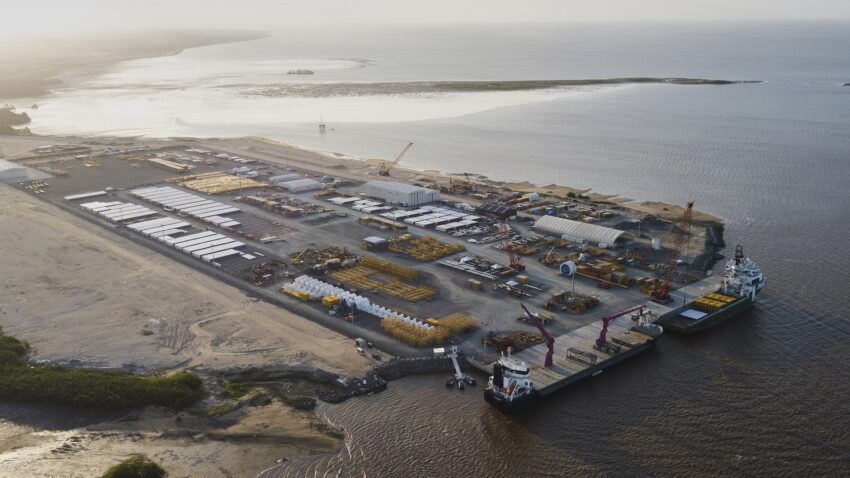
The Caribbean’s Dual Energy Transition: Oil, Gas, Renewables, and Climate Strategy As Caribbean nations navigate the tensions between fossil fuel development and climate vulnerability, new geopolitical dynamics emerge that will shape the region’s future. This article explores Caribbean energy policy, which sits at the intersection of geopolitics, climate finance, investor strategy, sovereignty, and narrative risk, as the region tries to build resilience, secure leverage, and navigate the global energy transition on its own terms Read More  

Read More